Sources checked up to the evening of 5 November 2026. Election results, share prices and permit statuses change from one day to the next. Written for information only, not investment advice.
The Democrats took the House and the Senate, Texas elected a governor who backs a moratorium, and 33 of the 45 local ballots on data centersData centerA building that hosts servers, storage and networking, powered and cooled continuously, day and night.See the glossary voted for restrictions (Engadget).
The very next day, markets repriced the companies exposed to the build-out of AI infrastructure: Vertiv lost 12.9%, Vistra 13.8% and Quanta 11.7% (CNT Trading). Other news weighed on the same day, and these drops do not on their own measure the effect of the vote. The risk is not that a sector stops. It is that it slows down while its debt keeps running.
This article follows on from “The megawattMegawatt (MW)A unit of power: what must be supplied at every instant. 1 MW = 1,000 kW. Not to be confused with the megawatt-hour, which measures an amount of energy used over time.See the glossary and the degree” (24 September 2026), which showed how the gap between the speed of AI and the speed of the grid is closed with gas, by bypassing the public grid, and with the bill sent to households. Voters have just refused that bill. It traces the Texas shock, measures its national reach, takes Fermi America as a case study, then compares the situation with 2007, follows the shockwave to European suppliers and shows who would come out ahead of the sorting.
The megawatt and the degreeThe gap between the speed of AI and the speed of the grid, and what closes it: gas, bypassing the public grid, the household bill.Texas, the epicenter of the shift
The most dynamic market in the United States has just elected officials who want to slow it down. Gina Hinojosa (D) beat incumbent governor Greg Abbott, James Talarico (D) beat Ken Paxton for the Senate, and the Democrats take the Texas House for the first time in 24 years (MIT Technology Review). Texas alone carries about a quarter of the data-center capacity planned in the United States, according to Goldman Sachs (The Next Web).
The brake was already on before the vote. On 21 September, Abbott ordered the TCEQ, the environmental regulator, to issue no permits to data centers until the ERCOT audit is complete (Office of the Governor). The TCEQ froze all air and water permits for infrastructure that directly powers data centers, on-site power plants included (Houston Public Media).
Hinojosa wants to go further. She called Abbott’s pause an “election pause” and campaigned for a moratorium (Daily Caller), to be extended until stricter AI rules are adopted (CNN). Her moratorium would cover new permits and, according to available reports, exempt projects already under construction (CNBC). But a governor can mostly delay approvals: a lasting moratorium or a tax reform has to go through legislation (SemiAnalysis).
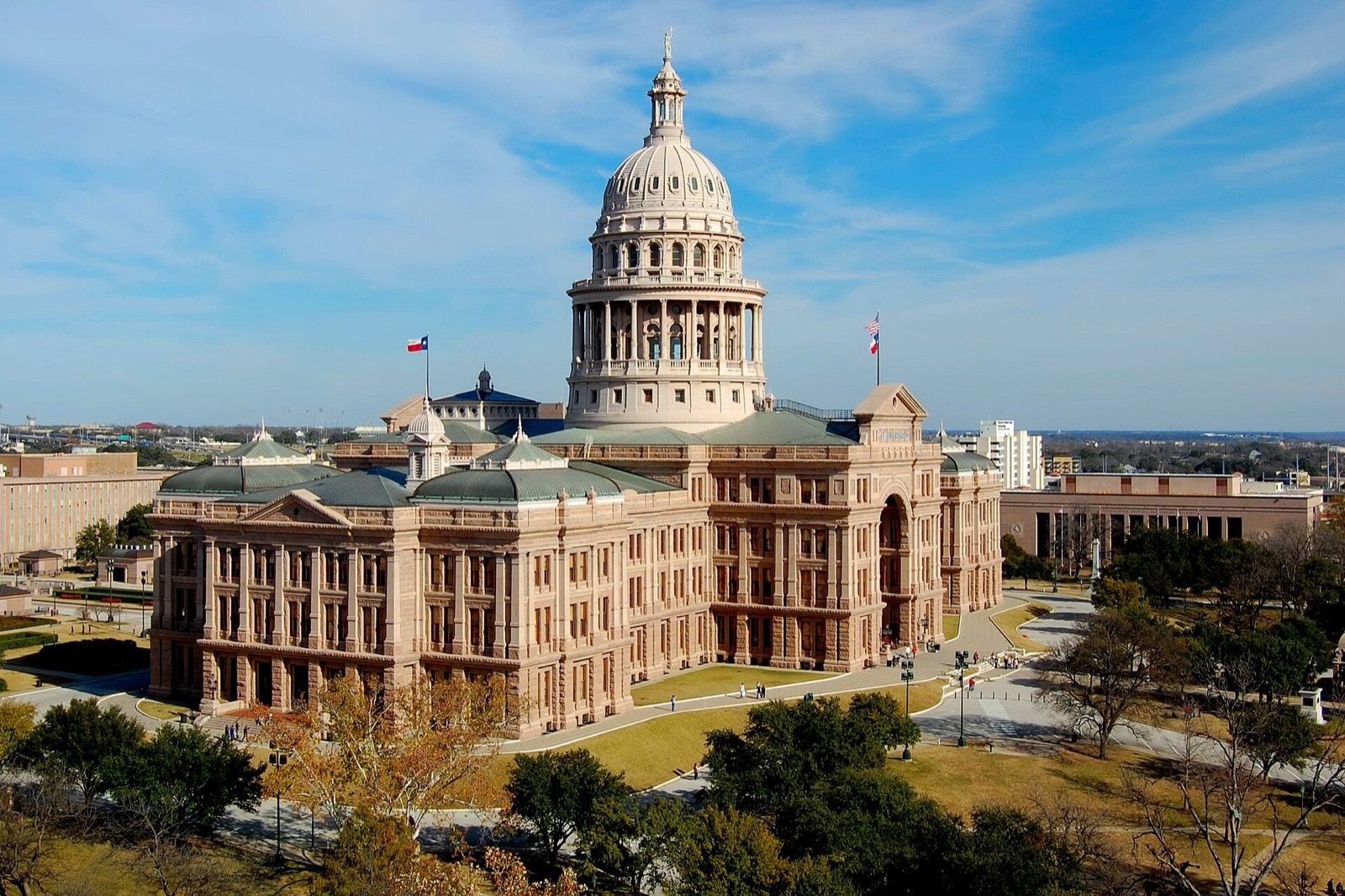
The electoral map tempers the shock. Ellis County, which leads in permit applications, and the western counties where projects are concentrated voted Republican. Decisions are split between cities, counties and the state, and the building-trade unions that backed the Democrats could hold back a moratorium (MIT Technology Review).
A national, bipartisan wave
The rejection goes beyond Texas and cuts across both parties. According to an NBC exit poll, 56% of voters say AI and data centers were a decisive or important factor in their vote for Congress (Engadget). As early as March, Gallup measured 71% opposition to an AI data center near one’s home, more than for a nuclear plant (Gallup).
| Elected or candidate | State, office | Position on data centers | Result |
|---|---|---|---|
| Sherrod Brown (D) | Ohio, Senate | End tax breaks, make data centers pay for their electricity (Fortune) | Elected, +5 points |
| Abdul El-Sayed (D) | Michigan, Senate | No rate increases, strict standards (Fortune) | Elected |
| Annie Andrews (D) | South Carolina, Senate | Two-year moratorium (TIME) | Elected |
| James Talarico (D) | Texas, Senate | Attacks on Paxton’s support for data centers (The Hill) | Elected |
| Amish Shah (D) | Arizona, House (1st district) | Promises to stop them being built (TIME) | Elected, race called by the AP on 5 November (KTAR) |
| Scott Colom (D) | Mississippi, Senate | Temporary ban (The Intercept) | Not called: Colom ahead by 1,813 votes on Thursday evening (Washington Post) |
| Mike Rogers (R) | Michigan, Senate | One-year moratorium (Detroit News/Yahoo) | Defeated |
| Ken Paxton (R) | Texas, Senate | Four-point plan to curb growth (Fox News) | Defeated |
Governors matter as much as Congress. Democrats won Nevada, Georgia, Ohio and Texas on promises of stricter rules. From January, states led by Democrats who favour moratoriums will carry about 45% of planned capacity, according to Goldman Sachs (CNN).
What Republicans lost, and where the data centers are
The 3 November 2026 flips, and the big Texas projects facing the permit freeze
Offices lost by Republicans
- Governor and Senate
- Governor
- Senate
- House seat
- Senate, not called
Texas: large projects under construction
- Gas permit frozen
- Subject to the ERCOT audit
- Exposure not documented
- Ellis, top county for permit applications: voted Republican
- Disc size: capacity in GW
- 420.8 GW
- of data-center connection requests at ERCOT, more than 5 times the grid’s peak
- ≈ 1/4
- of planned US data-center capacity is in Texas
- ≈ 45%
- of planned capacity will be in states led by Democrats who favour moratoriums
At the federal level, the brake is less certain. Bernie Sanders and Alexandria Ocasio-Cortez introduced a federal moratorium on AI data centers in March (Sanders). But analysts doubt a blocking law will pass, since Trump could veto it (Reuters via The Standard).
Audit: Stargate and the other Texas projects
Four campuses under construction are waiting on frozen gas permits, for more than 14 GW: Nexus Hubbard (Anthropic), the Stargate Abilene expansion, Fermi’s expansion, and Goodnight (Crusoe for Google) (Nameplate Report). The TCEQ has also suspended at least 17 stormwater and wastewater permits on data-center sites (Nameplate Report).
| Project | Developer, tenant | County | Size | Status | Exposure to the freeze |
|---|---|---|---|---|---|
| Fermi Project Matador | Fermi America | Carson | 6 GW permitted, ~5 GW requested | Phase 1 under construction | Expansion frozen |
| GW Ranch | Amazon | Pecos | 7.65 GW power plant | Under construction (dcmap.us) | Not documented |
| Nexus Hubbard | Nexus Data Centers, mainly Anthropic | Hill | 6.4 GW | Under construction (MIT Technology Review) | Gas permit frozen |
| Stargate Frontier | Vantage, Oracle, OpenAI | Shackelford | 1.82 GW | Under construction, delivery planned for H1 2027 (stargate.how) | Not documented |
| Stargate Abilene | Crusoe, Oracle, OpenAI | Taylor | ~1.2 GW | Partly in service, 42% delivered as of 29 August (stargate.how) | Gas expansion frozen |
| Stargate Milam | SB Energy, SoftBank, OpenAI | Milam | 1.2 GW | Lease signed, first buildings under construction (stargate.how) | Connected to ERCOT, so subject to the audit |
| Meta El Paso | Meta | El Paso | 1 GW | Under construction, in service in 2028 (Apollo Technical) | Not documented |
| Crusoe Abilene for Microsoft | Crusoe, Microsoft | Taylor | 900 MW | Under construction, 2027 (Apollo Technical) | Not documented |
| Goodnight | Crusoe, Google | Armstrong | 900 MW | Under construction (Apollo Technical) | Gas permit frozen |
The pending requests are of another order of magnitude. ERCOT tracks 474.7 GW of large-load interconnection requests, 420.8 GW of them from data centers, more than five times the grid’s all-time peak (POWER Magazine). Only 66.4 GW are provisionally kept in the first study batch, and 302.2 GW are excluded from it (Forbes).
Much of this queueInterconnection queueThe list of projects (power plants, storage, large consumers) waiting to be connected to the transmission grid.See the glossary is speculative. BNEF tracks only 50 GW of serious Texas projects and expects 17 GW installed by 2030; the audit could delay 49.8 GW and cost projects up to $15bn (POWER Magazine). ERCOT is due to deliver its audit report on 10 December, but that report does not reopen anything on its own (Nameplate Report).
Projects already under way often have their approvals; it is the projects still in the queue that are blocked, because they only start with a firm commitment from ERCOT (REjournals). For Stargate, the risk therefore lies mainly in the expansions and the grid connectionGrid connectionHooking a site up to the public power grid, with the guaranteed capacity that comes with it. It takes years to obtain and is often the scarcest asset.See the glossary , not in the buildings already under construction.
Fermi and Project Matador, a case study
Matador’s first phase is permitted, its expansion is frozen. Fermi America’s campus near Amarillo aims for 11 GW of private power. On 25 February 2026 the TCEQ granted it a Clean Air permitClean Air permitThe authorisation to emit pollutants into the air, required under the federal Clean Air Act. A gas plant cannot run without it.See the glossary for 6 GW of gas (Fermi via Placera). The next application, about 5 GW filed on 27 March (Barchart), is explicitly caught in Abbott’s freeze (Texas Dispatch).
Being energy-independent is no protection. Fermi generates its electricity on site, with a 2.6 GW complex planned with Hillcore (Energy Monitor). Yet the freeze hits self-powered projects like all the others (Forbes).
Washington sped up nuclear, not gas. The project, first named “President Donald J. Trump Advanced Energy and Intelligence Campus” in its licence application (NRCNRCThe Nuclear Regulatory Commission, the US federal authority that licenses and oversees nuclear reactors.See the glossary ), is the first in an NRC pilot programme that aims to halve the length of the environmental review (NucNet), and on 9 October the NRC made a preliminary recommendation to license four reactors (Headwaters Wire). But those reactors would not arrive before 2031-2032; until then, Matador runs on gas, whose permits are a Texas matter, where Washington has no say. The project designed to benefit from federal acceleration runs into the local level.
Gas is not scarce, water is. Permian BasinPermian BasinThe large oil and gas region of West Texas and south-east New Mexico. Gas comes up there with the oil, sometimes in surplus.See the glossary gas comes up with the oil, even when it is worth nothing: for lack of pipelines, its price at the Waha hub stayed negative for 134 days in a row in 2026 (VanEck). The bottleneck is not the resource, then, but the permit to burn it. Water, on the other hand, is a physical constraint: the Panhandle depends on the declining Ogallala aquiferAquiferAn underground layer of rock or sand that holds usable water. The Ogallala aquifer, under the Great Plains, is emptying faster than it refills.See the glossary , and the basin around Matador is rated as extremely high water stressWater stressThe ratio between water withdrawn and water available in a basin. Above 80%, it is rated extremely high.See the glossary (Compute Atlas). Fermi promises a closed loop for its servers, but its gas plants will also need cooling, and the state now prosecutes data centers that do not report their water use (Office of the Governor). Air and water, more than energy, are the two points where politics has tightened the vice.
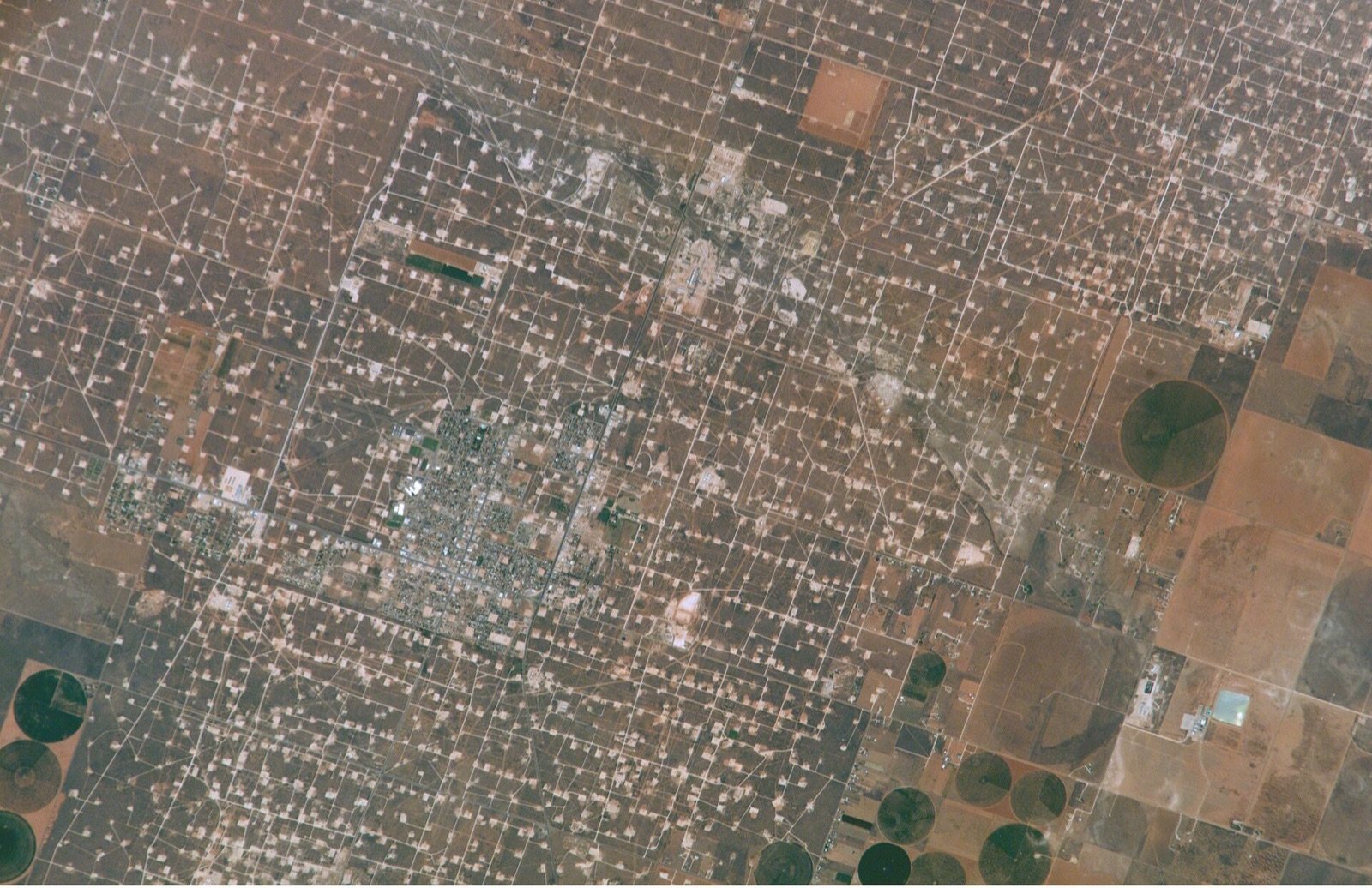
The commercial risk existed before the vote, and independently of it. The 15-year, $6.5bn lease signed with TensorWave in August (Motley Fool) only takes effect after closing conditions, including guarantees and project financing sufficient to build. The closing date had already been pushed back to 31 October (Fermi via Newswire). It passed with neither an extension nor a closing: the lease is therefore not in force, even though neither party has terminated it (Fermi press release, 3 November). AMD provided a credit guarantee for phase 1 in October (Motley Fool). Rick Perry, a co-founder, lost his board seat at the end of October (Texas Tribune). It is the build-up of both risks, political and commercial, that makes Fermi fragile.
The stock market punished both at once. FRMI shares lost 10.8% on 4 November (MarketBeat), then about 15% on 5 November, to around $1.54 (Google Finance). They had already lost 72% year to date as of 2 November (Motley Fool). Its results on 12 November will be the next test.
The debt does not stop
More than $500bn of debt already finances AI data centers, about $200bn of it private debtPrivate debtLoans made directly by investment funds, insurers or pension funds, without going through a bank or the bond market. More expensive, and harder to sell on.See the glossary , according to Bloomberg (TechRadar). Morgan Stanley expects private debt to provide more than half of the $1.5tn needed by 2028 (Reuters).
The mechanism that makes a slowdown dangerous:
- 1. Special-purpose vehicles.
- Projects are held by special-purpose vehiclesSPVA company set up to hold a single project and its debt (special-purpose vehicle). It keeps that debt off the balance sheet of the group that uses the project.See the glossary (SPVs), often off the balance sheetsOff balance sheetCommitments or debts that do not appear in a company’s main accounts, for example because they sit in an SPV.See the glossary of the big groups. Meta’s Hyperion campus is 80% owned by Blue Owl (TechRadar).
- 2. Interest from day one.
- Interest runs from the construction phase, but repayments depend on future rents.
- 3. A frozen permit.
- A frozen permit pushes those rents back without stopping the interest: the project costs more and earns later.
- 4. Refinancing.
- It then has to refinanceRefinancingReplacing a debt that falls due with new debt. When credit closes or gets expensive, this is where the risk materialises.See the glossary , in a market that is closing.
Order of magnitude: a $5bn project financed at 8% carries about $33m of interest charges a month.
| Delay | Interest accrued during the delay |
|---|---|
| 3 months | $100m |
| 6 months | $200m |
| 12 months | $400m |
Illustrative simulation, constant principal and simple interest. These are not Fermi’s figures.
This is not a net extra cost: some of that interest would have run anyway. The cost of the delay lies in the shift of the rents that were meant to cover it, and in the fees of any refinancing. Across Texas, BNEF estimates the audit could cost projects up to $15bn (POWER Magazine).
Lenders are already showing signs of strain. The Bank of England is questioning banks about loans made without a signed tenant (Bloomberg). HSBC is looking to cover its data-center debt with credit insurance (Bloomberg), and the cost of insuring against tech defaults is hitting records (Insurance Journal). According to Morgan Stanley, AI-related debt issuance fell to $23bn in September, less than half of August; the bank cites doubts about profitability and political opposition to data centers among the reasons (Investing.com).
The risk reaches all the way to savers. Private debt is funded in part by insurers and pension funds, such as Athene, the $470bn insurer controlled by Apollo (Deccan Herald).
The gigawatt and the dollarWho finances AI’s gigawatts, with whose money, and who carries the risk if the promised revenue does not arrive.2007 and 2026: an analogy of fragility, not a precedent
In both cases, massive debt rests on an economic assumption that can become untenable. Before 2008, it was the continuous rise in house prices, which justified risky loans that were then securitisedSecuritisationPooling loans and selling them to investors as securities. The lender offloads the risk, which then circulates elsewhere.See the glossary ; rising rates only sped up the defaults. In 2026, it is the steady arrival of approvals and rents. Jefferies judges that data centers restRESTThe most common style of web API: data is exchanged through addresses and simple verbs (read, create, update, delete).See the glossary on tenants’ future commitments, like real estate before 2008 (BigGo Finance).
| Subprime (2006-2008) | AI data centers (2026) | |
|---|---|---|
| What weakens the assumption | Risky loans, defaults and securitisation, made worse by Fed rate rises (1% in 2004, 5.25% in 2006) | Regulatory: permit freezes, moratoriums, end of tax breaks |
| Role of the midtermsMidtermsUS mid-term elections, two years after the presidential vote: the whole House of Representatives, a third of the Senate, many governors and local officials.See the glossary | Nov. 2006: the Democrats take Congress, then manage the crisis | Nov. 2026: elected officials can themselves trigger the slowdown |
| Reach of the shock | The whole economy, through the cost of credit | One sector and targeted states, about 45% of planned capacity |
| Off-balance-sheet debt | Banks’ securitisation vehicles | HyperscalersHyperscalerThe cloud giants that build and run their own data centers at very large scale: AWS, Microsoft, Google, Meta, Oracle.See the glossary ’ SPVs and private debt |
| Amplifier | CDOsCDOA security that pools debts and slices them into tranches of varying risk. CDOs of subprime loans spread the 2008 crisis.See the glossary , CDOs of CDOs, CDSCDSAn insurance contract against a borrower’s default (credit default swap). Its price measures market fear.See the glossary that AIG could not pay | Nothing comparable reported (The State of AI) |
| Underlying asset | Houses, durable | Data centers designed for one generation of chips, quickly obsolete |
The clearest difference is the nature of the shock. In 2007, millions of households stopped paying, gradually. In 2026, a single decision can block multi-billion projects at a stroke: a risk that is concentrated, sudden, and hard for a lender to model.
2007 sheds light on the fragility without heralding a new crisis. No contagion chain comparable to 2008 has been shown. The stress remains localised among the weakest borrowers: nearly half of the data-center bonds issued in 2026 are speculative gradeSpeculative gradeDebt rated below investment grade by the rating agencies: riskier, and so better paid.See the glossary (Forbes), and indebted neoclouds are falling behind (see below). The big banks have little concentration in data centers (Chicago Fed) and withstand the IMF’s stress test (IMF).
If there is contagion, it would run outside the banks: through SPVs, 90% debt-financed (Kansas City Fed), through private debt, insurers and pension funds, which are less liquid, and through circular financing among AI players: the IMF has counted 14 deals since 2023, about $300bn of equity and $650bn of debt against $1.4tn of promised revenue (IMF, Global Financial Stability Report). AI-related borrowing has grown by about 1.3 points of GDP in three years: the fairest parallel may be the telecoms of 2000, more than subprimeSubprimeMortgages granted to fragile borrowers, at the heart of the 2007-2008 financial crisis.See the glossary (Perspective on Risk).
A whole industrial chain exposed, all the way to Europe
A gigawatt of AI data center represents about $43bn of equipment, at $42.7m per MW in 2026. Servers and networking make up 85% of it: Nvidia, AMD, Dell, Supermicro, TSMC, SK hynix. The remainder goes to power, cooling and buildings, where Europeans are strong: Schneider Electric, Legrand, Siemens Energy, Hitachi Energy in Sweden, mtu engines, Stulz, Vinci or Skanska (BofA Global Research count, cited in the article “Where the models run, in Europe”, 24 October 2026).
The United States fills the order booksBacklogOrders signed but not yet delivered. It gives visibility on sales in the months and years ahead.See the glossary . It accounts for about 78% of global AI compute capacity, against 5% for Europe (Bruegel, same article). Several European suppliers expanded their factories in 2025-2026 citing data centers, from Hitachi Energy’s transformers in Ludvika to Socomec’s UPS units in Benfeld.
The stock market sold off suppliers from 4 November:
| Stock | Business | Move | Source |
|---|---|---|---|
| Modine | Cooling | About –24% intraday | Yahoo Finance |
| Sterling Infrastructure | Construction | About –19% intraday | Yahoo Finance |
| Vistra | Power generation | –13.8% | CNT Trading |
| Vertiv | Power and cooling | –12.9% | CNT Trading |
| Quanta Services | Power grids | –11.7% | CNT Trading |
| Siemens Energy | Turbines, grids | –5.9% | Ad-hoc News |
| Semiconductor index (SOX) | Chips | –3.1% | ChainCatcher |
Europe held up better. The Euro Stoxx 50 gained nearly 2% on 4 November, lifted by banks (XTB). Legrand even rose 3.4% on 5 November after raising its targets, citing data-center demand (ADVFN).
Orders, for their part, have not moved yet. Vertiv’s sales jumped 61% in the third quarter and its orders more than doubled (Yahoo Finance). For Trefis, most of 2027 is already in the backlog: only new, unsigned Texas orders are at risk (Trefis). The real test will come with 2028 orders.
What can cushion the shock, and when we will know
Analysts’ central scenario is a slowdown, not a halt. For BNY Wealth, political uncertainty will not derail AI investment, but it can shift its timing and raise its cost (Reuters via The Standard).
- 2027 is largely locked in.
- The top 20 states plan about 33.8 GW in 2027, three quarters of it already under construction; the risk is concentrated on 2028 (ChainCatcher, citing SemiAnalysis).
- Money pushes to build.
- Bernstein estimates the projects weigh 8% of the GDP of the states concerned, and that officials will mostly change who pays for the grid, without stopping growth (Investing.com).
- Local and union counterweights.
- Republican counties, construction and competition with China can soften the promises once in office (MIT Technology Review).
- The strongest will hold up better.
- Hyperscalers absorb delays; heavily indebted developers without a signed tenant, like Fermi, are the most fragile. Evercore sees delays of six months or more for neoclouds exposed to Texas or Georgia (CNT Trading).
What research says: flexibility, a costly way out
Recent research does not address political risk, but the technical condition set by ERCOT: stay flexible or generate your own power.
- A real but limited gain.
- Shifting computation in time or between sites cuts grid investment and costs by 3 to 21%, with diminishing returns as the deferral gets longer (Chen and Zheng, April 2026).
- Training gives way less than people think.
- A first systematic measurement shows how training throughput falls when GPUGPUGraphics processing unit: the massively parallel chip used to train and run AI models. It is what draws and heats the most.See the glossary power is reduced (Colangelo et al., September 2026). Other authors argue that studies overestimate this flexibility, which is constrained by checkpoints (Tong et al., October 2026).
- A large site pushes up its own prices.
- A large enough data center changes the price of the electricity it will pay, which complicates its planning (Mungo et al., September 2026).
- Water moves to the power plants.
- The choice of cooling shifts part of the water use to electricity generation, at the heart of the Texas water audit (Alston et al., September 2026).
The most likely outcome is therefore neither a yes nor a no, but projects approved under conditions on flexibility, water and cost sharing, more expensive and slower than announced.
Dates to watch
- 12 November 2026
- Fermi’s results, with news on TensorWave and the 5 GW application.
- 10 December 2026
- ERCOT audit report: the condition set by Abbott for reopening TCEQ permits (Office of the Governor).
- January 2027
- Hinojosa’s inauguration, the opening of the Texas legislative session and the arrival of the new Congress.
- Suppliers’ 2028 orders
- The first concrete indicator of a real slowdown.
The sorting: why the slowdown favours the biggest
A slowdown does not hit everyone: it sorts. If new supply is held back, capacity already in service gains value. For JPMorgan, that is what explains the gap on the stock market: the big groups that already have their capacity benefit, while debt-financed neoclouds borrow at much higher cost (CNBC).
This sorting was not born of the elections. Gartner already expects more than 80% of neoclouds to stop operating independently by 2030, for mainly economic reasons: insufficient returns, cost pressure, poorly differentiated models (Gartner). Regulatory risk can speed this up; by how much, no data yet allows us to measure.
Three models, three risks. Fermi develops energy and buildings: its risk lies in permits, its tenants and its financing. CoreWeave, Nebius and Nscale sell compute: their risk lies in their debt, their leases and the profitability of that compute. The shock passes from one to the other: a delayed developer delivers late to a neocloud, which delivers late to its customers.
| Neocloud | Debt and maturities | Fragility signal | Customer dependence |
|---|---|---|---|
| CoreWeave | ~$35bn of debt and $16.3bn of leases (Bisnow); ~$4.4bn to repay by end-2026, then $6.2bn in 2027 (Forbes) | Expected interest of $860m to $940m in Q3, against a targeted adjusted operating incomeAdjusted incomeA result presented by the company excluding certain charges. It flatters profitability and does not say whether cash covers the interest.See the glossary of $200m to $260m (Yahoo Finance) | Meta, OpenAI, Microsoft, Anthropic |
| Nebius | $4.3bn of convertiblesConvertible bondDebt the lender can turn into shares of the company. It costs less interest but dilutes shareholders.See the glossary in Q1 and a first secured debt of $775m (SEC) | Growth funded in part by more than $9bn of customer prepayments expected in 2026 (SEC) | Two customers account for 26% and 21% of H1 2026 revenue (SEC) |
| Nscale | Convertible financing and equity raises | Loss of $1bn in H1 on $141m of revenue (City AM) | Microsoft and Anthropic; Microsoft pulled out of Loughton (Reuters via BusinessDay) |
These signals are of different kinds: they cannot be compared with one another and do not rank default risk. For CoreWeave, adjusted income excludes certain charges and does not measure the ability of cash flow to pay the interest.
CoreWeave is solvent in the short term, but very sensitive to the timing of its build-outs. At the end of June, it had $15.6bn ($5.5bn in cash and $10bn in undrawn credit lines) against $35.6bn of debt, said it was covered for twelve months and was meeting its bank covenants (quarterly report, SEC). Its operations already generate cash, $3.7bn in the first half, but its growth is still financed externally, with $14bn of new financing over the same period (Stock Titan, from the SEC filing). Its credit lines are mostly used to buy hardware for specific contracts, and about $10.6bn of debt matures by the end of 2027 (Exent, from the SEC filing). A delayed site therefore shifts its revenue without shifting its maturities; measuring the size of that risk would require modelling a specific campus.
Connected sites were already expensive before the vote. In Texas, Plug Power sold its Graham site to Stream for $50m, plus up to $26.5m depending on the power capacity finally obtained, on a reference of 164 MW: the price explicitly depends on the megawatts (Cashpian, from DatacenterDynamics). Connected land is worth $584,000 per MW on average in the major US markets, up 51% in a year (Metro Colo Advisory, from Cushman & Wakefield). The consortium of BlackRock, Microsoft and Nvidia paid $40bn for Aligned and its 6.4 GW, current and planned (Aligned). As early as 2025, CoreWeave had offered $9bn for Core Scientific and its 1.3 GW, presenting the deal as a purchase of power (CoreWeave press release), a takeover that failed for lack of shareholder approval. All of these deals predate the elections: they show an existing premium for secured power capacity, which restrictions could strengthen, not a rise caused by the vote. And that value depends on location, on the power actually available and on the price of electricity; a permit does not always follow the company that is bought.
Three scenarios remain open:
| Scenario | Trigger | Main consequence |
|---|---|---|
| Lasting scarcity | Permits, water, grid | Existing sites gain value, the big players buy |
| Overcapacity | Demand below investment, more efficient chips | Compute prices fall, write-downsWrite-downReducing the book value of an asset that is worth less than expected, for example servers that have become obsolete.See the glossary for everyone |
| Accelerated consolidation | Expensive credit, thin margins | Takeovers and restructurings of neoclouds |
The political brake pushes towards the first, but it can also relieve some neoclouds by raising rents on compute already in service. The second scenario, overcapacity, would hit everyone, the big players included. Nvidia, which backs neoclouds against hyperscalers’ in-house chips, and a Democratic Congress wary of concentration would also hold back consolidation that is too fast.
This is the precedent of the telecoms in 2000: fibre built on credit survived and was bought cheaply, but those who had built it went bankrupt. The difference: fibre served for decades, a GPU for a few years. This time, it is the sites, the grid connections and the permits that would change hands.
Conclusion: political acceptance cannot be bought
The AI industry long treated compute capacity as a constraint that capital alone could solve: buy GPUs, build power plants, reserve land, raise debt.
The 2026 midterms are a reminder that part of that capacity depends on a resource that is not so easily bought: political acceptance. When it withdraws, projects can wait. Creditors do not always wait.
Texas will be the first test. Projects already under way should hold; it is the expansions, the new grid connections and the indebted developers without a signed tenant that will carry the risk. But the exact weight of the vote remains unknown: the fragility of neoclouds, the premium for connected sites and the permit freeze all predate it. The midterms do not mechanically herald a consolidation; they make a scenario already in the making more likely. What is decided between 10 December and the 2027 legislative session will tell whether AI infrastructure has become a lasting political risk.
Sources
- Politics and Texas: MIT Technology Review · Office of the Governor · Houston Public Media · Daily Caller · CNN · SemiAnalysis
- National elections: TIME · Fortune · Engadget · The Intercept · The Hill · Fox News · Sanders
- Fermi: Placera (Fermi press release) · Texas Dispatch · Texas Tribune · MarketBeat
- Debt: TechRadar · The State of AI · Bloomberg, Bank of England · Bloomberg, HSBC · BigGo Finance
- Markets and suppliers: CNT Trading · Yahoo Finance · Trefis · Investing.com, Bernstein · XTB · ADVFN
- European industrial chain: BofA Global Research and Bruegel, cited in “Where the models run, in Europe” (24 October 2026)
- Audit of Texas projects: Nameplate Report, frozen permits · Nameplate Report, Weekly Pulse · stargate.how · Apollo Technical · dcmap.us · POWER Magazine, audit · POWER Magazine, BNEF · Forbes, Batch Zero · REjournals
- Additional: Fermi via Newswire, postponement of the TensorWave closing · CNBC, existing capacity and neoclouds
- Systemic risk: IMF, GFSR October 2026 · Reuters via Yahoo · Chicago Fed · Kansas City Fed · Perspective on Risk · Bisnow · Forbes, speculative-grade bonds · Business Insider via AOL · Wall Street Times
- Neoclouds: CNBC, CoreWeave · Forbes, GPU collateral · Reuters via Egyptian Gazette, Nscale · Asia Business Daily
- Primary sources: Gallup, data-center poll · IMF, Global Financial Stability Report, October 2026 · Reuters, data-center debt · NRC, Matador docket · The Next Web, Goldman Sachs
- The sorting and neoclouds: Gartner · Nebius, SEC filings · Motley Fool, CoreWeave · DatacenterDynamics, S&P · Trending Topics · Reuters via BusinessDay, Nscale · Fermi press release, 3 November · Investing.com, Morgan Stanley
- Liquidity and site prices: CoreWeave, quarterly report (SEC) · Exent · Cashpian · Metro Colo Advisory · CoreWeave press release, Core Scientific · Aligned
- Updated election results: KTAR, Arizona · Washington Post, Mississippi · Stock Titan, CoreWeave cash flow
Share this article